
Design-Build Process: From Brief to Handover
Follow the design-build process from brief to handover with an owner decision table: inputs, approvals, open issues, price commitments and release conditions.
A design review can leave an owner thinking work is approved while the team is still waiting for a scope or price decision. The design-build process carries a project from the owner’s brief through feasibility, design and pricing, construction, and handover, with decisions recorded between those activities.
For an owner, the useful process map shows what must be decided before the next piece of work starts. Design-build combines design and construction under one owner agreement, but team selection and final pricing occur at different points in best-value and progressive procurement. Use the worksheet below to identify the input documents, authorized decision-maker, approval record, unresolved issues and release condition for each phase. Its phase groups are an editorial planning aid; your procurement documents, agreement and project requirements establish the actual sequence and authority.
- Before design advances: identify the requirements, constraints and assumptions being accepted.
- Before spending is committed: connect the scope and document revision to the price and authorization.
- Before handover closes: identify the records received and the work still assigned to someone.
For the contract relationship behind this sequence, start with what design-build means for an owner.
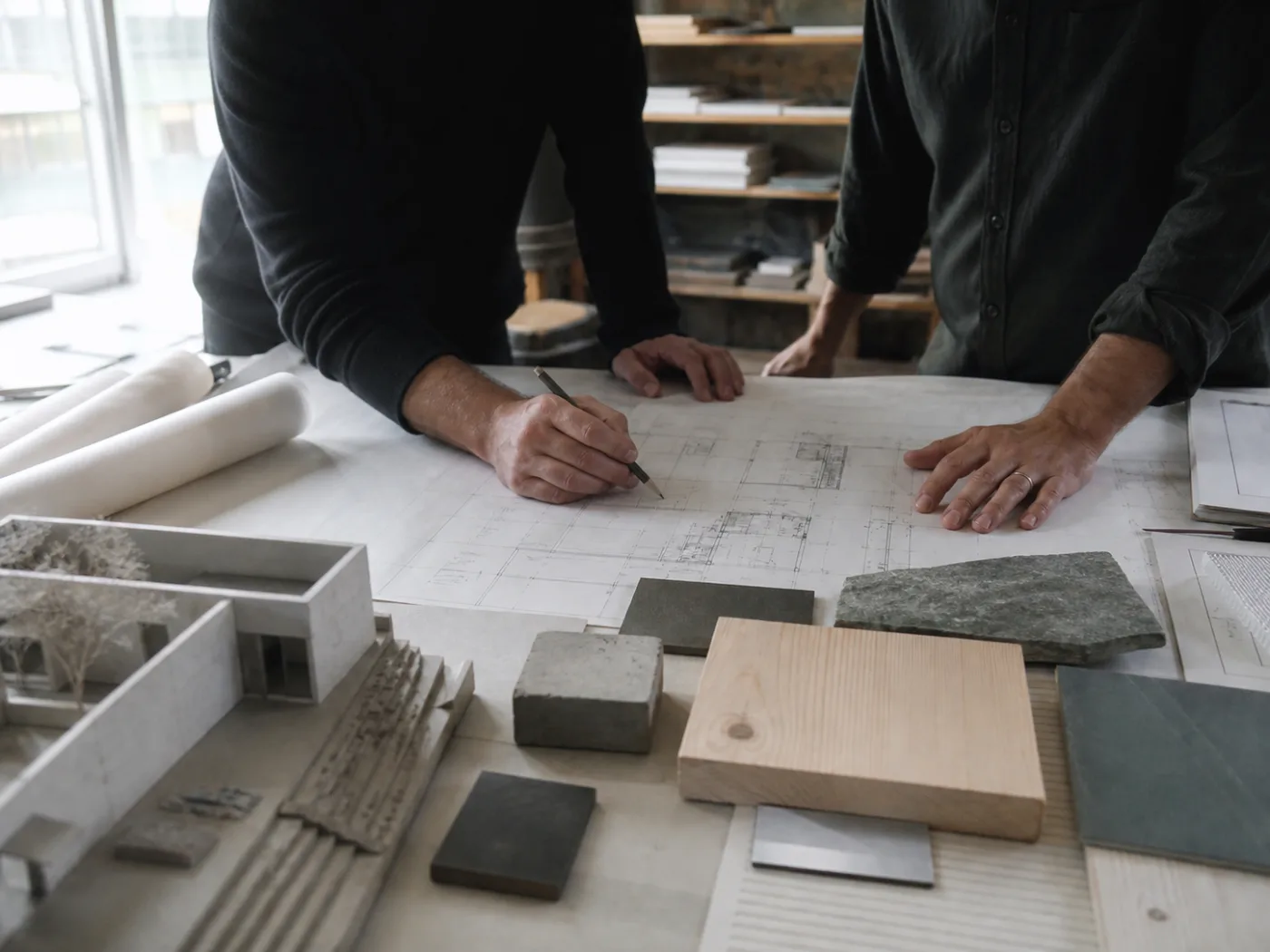
What are the phases of the design-build process?
Use brief and feasibility, design development and pricing, construction release, construction, and handover as practical groups for tracking owner decisions. Team selection belongs before or within design development according to the procurement route; investigations and design reviews may repeat.
DBIA’s public guidance distinguishes best-value and progressive delivery. Its best-practices framework addresses procurement, contracting and execution. The table below translates those broad activities into an owner worksheet rather than claiming an official five-phase standard.
Owner decision table — adapt each row to the actual package and agreement. “Owner decision-maker” means the person with the relevant delegated authority, supported by the appropriate advisors. It does not assign professional design or regulatory approval to the owner.
Scroll horizontally to see all columns.
| Phase | Inputs to bring | Decision and decision-maker | Approval record to keep | Open items and condition for the next step |
|---|---|---|---|---|
| Brief and feasibility | Intended use, site information, budget boundary, target dates and investigations available so far | Owner sponsor decides whether to investigate further, revise the brief or advance a defined option | Dated brief and feasibility decision, including assumptions and accepted next scope | Name missing information and who will obtain it; identify which findings must be resolved before design advances |
| Design development and pricing | Current drawings and criteria, estimate basis, options, exclusions and proposed agreement or amendment | Authorized owner representative decides which design and commercial scope to accept; professional reviews remain with their assigned reviewers | Accepted document revisions, option selections, price basis and authorization | List unpriced items and unresolved interfaces; release only the services or work actually authorized |
| Construction release | Defined work package, applicable approvals, current documents and readiness information | Person authorized under the agreement releases the specified work after the required reviews | Written release identifying scope, document revisions and conditions | Confirm the applicable permits, access and prerequisite work; carry deferred packages separately |
| Construction and changes | Released baseline, questions, proposed changes and current cost/schedule information | Assigned reviewers evaluate the proposal; authorized parties decide changes under the contract procedure | Review responses, change decisions and revised instructions linked to the baseline | Give each issue a responsible person and due date; identify affected work awaiting a decision |
| Handover and follow-up | Contract completion criteria, inspections and tests applicable to the work, operating records and outstanding-item list | Named parties make the completion and acceptance decisions assigned to them; owner confirms receipt and operational readiness within their role | Completion records, document receipt, training records and assigned follow-up | List outstanding corrections, deferred tests and missing records with owners and dates; verify any separate occupancy requirements |

What should the owner settle during brief and feasibility?
Record what the project must achieve and what is still unknown before asking a team to advance an option. Treat feasibility as a decision about the next defined investment in information or design, rather than a declaration that every site risk has disappeared.
We recommend separating the brief into three parts:
- Required outcomes: intended use, essential spaces or functions, operating needs and constraints the owner cannot trade away.
- Working assumptions: site or existing-building information, access, utilities, budget scope and schedule assumptions that still need confirmation.
- Next authorization: the investigation, option study or design work being commissioned, its deliverables and who decides what follows.
If an option depends on information that is missing, give that dependency a person and a decision date. The preconstruction risk checklist helps organize the investigations; the process record should show how their findings change the decision to proceed.
When are the team and construction price selected?
They are separate decisions in progressive delivery, while best-value procurement evaluates design and price before award. DBIA’s comparison of the two approaches explains that difference: best-value selection establishes the proposed scope and price through competition; progressive selection brings the team aboard primarily for qualifications, then develops design and commercial terms toward a later price commitment.
Scroll horizontally to see all columns.
| Procurement approach | What the owner evaluates at selection | What the process record should distinguish |
|---|---|---|
| Two-step best value | Shortlisted teams’ design, project approach and price proposals | The accepted proposal and its scope basis, followed by later design development and changes |
| Progressive design-build | Team qualifications and the proposed approach to developing the project | Initial service authorization, developing design and estimates, and the later decision on the construction price and scope |
For either route, our recommendation is to keep design acceptance, estimate review and authorization to spend as separate entries. A meeting can address all three while leaving one undecided. Record exactly which commitment was made.
Use progressive design-build’s price decision for that later commitment, and early budget alignment to reconcile a changing design with the owner’s budget. Neither an early estimate nor a budget ceiling alone identifies the work the parties have agreed to deliver.
What must be clear before construction starts?
Name the work package being released and the documents and approvals on which that release depends. “Start construction” is too broad if only a particular area or package is ready.
As an owner planning check, ask the team to read back:
- Scope: the location and work included in this release, plus what remains outside it.
- Document basis: the drawing, specification and instruction revisions the package uses.
- Readiness: applicable permissions, site access, prerequisite work and interfaces requiring confirmation.
- Authority: who can issue the release under the agreement and where that authorization is recorded.
- Remaining conditions: unresolved items, affected work and the person responsible for closing each item.
If design and construction are proposed to overlap, apply these questions to each proposed release. The owner’s willingness to proceed does not establish that a permit, professional review or contractual prerequisite has been satisfied. Verify those requirements with the responsible project parties and authorities.
Use the preconstruction meeting agenda and action log to organize the discussion. The agenda records questions and decisions; the release itself must come through the procedure that applies to the work.
How should a change move through the process?
Keep the proposed change connected to the accepted baseline, the review needed and the authorization eventually issued. The following is our recommended record sequence; follow the agreement’s actual notice, instruction and change procedures.
Scroll horizontally to see all columns.
| Record step | What to capture | Question it resolves |
|---|---|---|
| Identify the baseline | Released scope and document revisions | What is the team currently working to? |
| Describe the proposal | Requested difference, reason and affected work | What would change? |
| Obtain the review | Assigned design or technical response and proposed cost/time implications | What must be evaluated before deciding? |
| Record the decision | Authorized person’s decision, conditions and referenced documents | What has actually been accepted or instructed? |
| Carry it through | Updated documents, communication to affected participants and completion status | Has the decision reached the work and the record? |
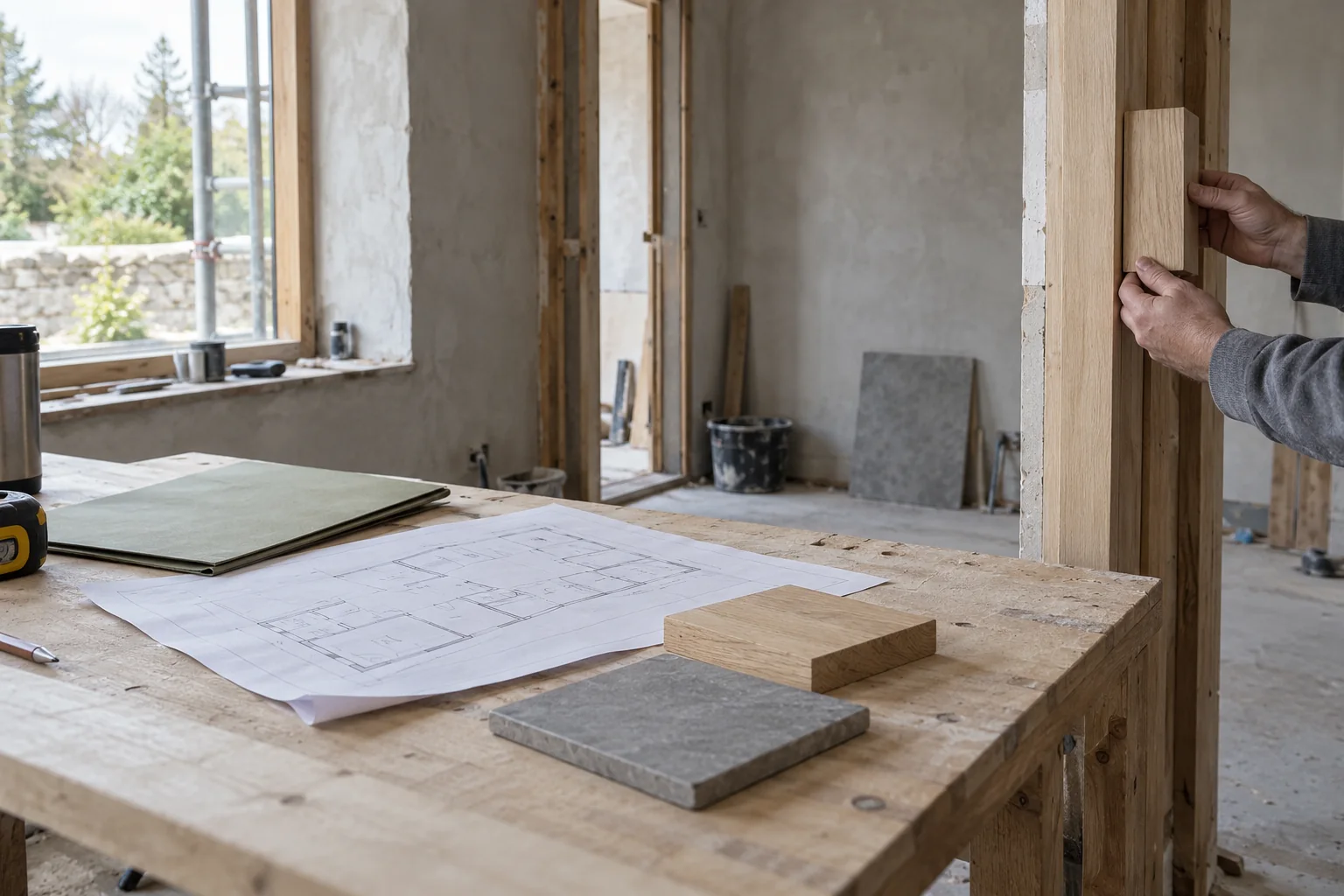
For example, in a hypothetical material substitution, a sample selection is only one entry. The team would still need to identify the specified baseline, arrange the relevant technical review and record any scope, cost or time decision through the applicable procedure. A photograph of the preferred sample cannot carry all those decisions.
The design-build contract review guide helps locate the authority and document provisions to check. This worksheet does not decide entitlement to payment or extra time.
What should be recorded at handover?
Check the completion evidence and operating information against the project’s requirements, and assign every remaining item. A key handover, receipt of documents, completion decision and permission to occupy may involve different records and decision-makers; identify those separately for the project.
For commissioned building systems, WBDG’s commissioning-documentation guide describes project-specific records including test results, issues logs, systems information and training documentation. It also explains that seasonal testing may continue into initial operation. These are useful planning topics for the applicable systems, rather than a universal closeout requirement for every project.
Our suggested owner receipt check is:
- Can the operating team find the manuals, record information and training material required for its systems?
- Are required inspection, testing and commissioning records available to the assigned reviewers?
- Does each outstanding correction, missing document or deferred test have a responsible person and due date?
- Has the team identified the relevant completion, acceptance and occupancy decisions without treating one as proof of another?
Where an item is deferred, record why, what remains to be done and who will confirm closure. Keep the current record accessible to the people operating the building.

How can you use the decision record today?
Copy or print the table below for the next decision on your project. Leave unknown fields blank and assign someone to confirm them. One record should describe one defined authorization; link other decisions when they depend on it.
| Field | Your project entry |
|---|---|
| Current phase and work package | |
| Decision requested and next activity | |
| Input files, dates and revisions | |
| Required reviewers and their responses | |
| Authorized decision-maker | |
| Scope, price and schedule basis being accepted | |
| Approval record, date and conditions | |
| Unresolved matters, responsible person and due date | |
| Conditions to meet before the next activity starts | |
| Where the decision and updated documents are shared |
Begin with the next commitment the team is asking the owner to make. If the inputs or authority are unclear, use the record to identify the missing answer before treating the next activity as released.
Method and sources
This independent editorial guide organizes public guidance into a decision worksheet. The tables, release questions and change-record sequence are our planning recommendations, not a standard contract procedure or an account of a project we delivered. The applicable agreements, professional appointments, procurement rules and authorities determine project-specific duties and permissions. No standard project duration, price or savings is assumed.
Sources checked October 16, 2026:
- DBIA, What Is Design-Build? — combined delivery and procurement variations.
- DBIA, Design-Build Best Practices — procurement, contracting and execution framework.
- DBIA, Taking a Closer Look: Progressive Design-Build and Best Value Design-Build — selection and price timing; published June 23, 2023.
- WBDG Commissioning Committee, Commissioning Documents: Process, Contents, and Acceptance — project-specific documentation across delivery and initial operation, within the scope of commissioning.
Related guides

Delegated Design vs Design Assist: Responsibility Guide
Separate delegated design, design-assist and design-build. Use a responsibility matrix to record criteria, calculations, submittals and review duties.
Read guide Design-Build Contracts: Forms and Checklist
Match AIA, DBIA and ConsensusDocs design-build forms to the right parties, check older document numbers, and prepare a contract review record before signing.
Read guide
What Is Design-Build? An Owner's Guide
What design-build means, who the architect works for, what drives its cost, when the price becomes firm, and the trade-offs owners should weigh.
Read guide