
EPC Contractor: Match the Test to the Plant
An EPC contractor selection fails when a 300 MW test is copied onto the wrong plant, or left blank. The 2017 Rupsha invitation prints 325 million USD and two 300 MW contracts.
An EPC contractor selection fails when the qualification test belongs to a different plant, or when the test amounts are still blank. The wrong firm gets through, the right firm is excluded, and the scope gap shows up at handover.
SEI Design Build is an independent publication. It does not prequalify firms or award contracts. Who signs the works, and how EPC differs from EPCM, is already in the EPC and EPCM comparison. This page is the test that sits in front of that signature.
Write the plant before you write the test
The Asian Development Bank invitation for prequalification, dated 2017-05-09, is for loan 50161-BAN, the Rupsha 800 MW combined-cycle project. The employer is North-West Power Generation Company Limited. The contract title is engineering, procurement, construction, and commissioning of that plant on a turnkey basis, one EPC contract.
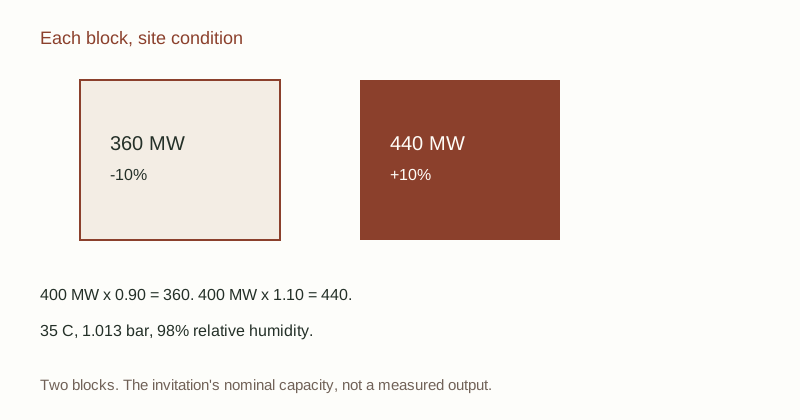
The invitation asks applicants to prequalify for two blocks of gas-fired combined-cycle plant. Each block has a nominal capacity of 400 MW ± 10% at a stated site condition: 35°C, 1.013 bar, and 98% relative humidity. Primary fuel is natural gas. Secondary fuel is distillate oil. The site is in Khalishpur, Khulna, 271 km from Dhaka.
400 × 0.90 = 360 MW per block. 400 × 1.10 = 440 MW per block. Those products are the invitation’s nominal band at the stated air condition. They are not a measured output. The invitation titles the project 800 MW, which is two times the 400 MW nominal figure, and it does not print 720 MW or 880 MW. Adding the two per-block ends is arithmetic on the printed band, not a second capacity in the invitation.
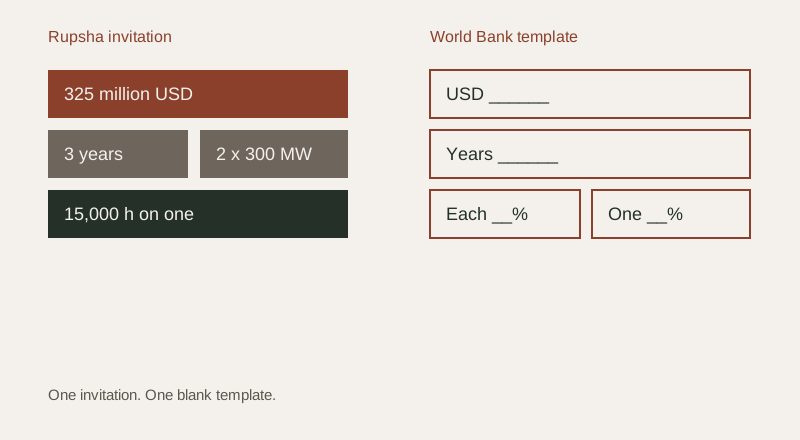
One invitation fills the tests. One template leaves them empty.
The same invitation says the figures below are a summary, and that Section 3 of the prequalification document prevails if the invitation and that document disagree. The tests it prints are:
| Test | Printed value |
|---|---|
| Average annual turnover | USD 325 million, certified payments for contracts in progress or completed, within the last 3 years before the application deadline |
| Similar EPC work | At least 2 combined-cycle contracts, each at least 300 MW, with a gas turbine of at least 100 MW in one unit, successfully or substantially completed within the last 10 years |
| Operating record | At least one of those contracts in commercial operation for at least 15,000 hours before the deadline |
| Work outside the home country | At least 1 EPC contract for a power plant of at least 300 MW, successfully or substantially completed within the last 10 years |
The World Bank’s February 2020 standard procurement document for prequalification of works uses the same kind of turnover row and leaves the amounts blank. Criterion 3.2 asks for a minimum average annual construction turnover of an inserted US dollar amount. The amount is total certified payments received for contracts in progress or completed within the last inserted number of years, divided by that inserted number of years. In the compliance columns, the single entity must meet the requirement, all parties combined must meet it, each joint-venture member must meet an inserted percentage of it, and one member must meet another inserted percentage. A joint venture does not automatically pool the whole turnover. Both percentages stay blank until the employer writes them.
Criterion 4.1(a) in that template asks for construction experience as prime contractor, joint-venture member, subcontractor, or management contractor for at least an inserted number of years, starting 1 January of an inserted year. The year is blank on the template.
Do not move the 300 MW test onto a building
The 325 million USD turnover and the 300 MW contracts describe this 2017 power-plant invitation. They are not a bar for a school, a house, or a design-build building. The design-build firm guide uses licenses, insurance, and a project brief for building teams. Using the power-plant test there excludes firms for the wrong reason. Leaving a power-plant test blank, or replacing it with a building license, lets a firm through without the similar-contract record that invitation asked for.
The 15,000 hours are commercial operating hours on a completed contract, printed as an experience test. They are not a runtime for equipment on a project that has not been built.
When this does not apply
- The employer has issued the full Section 3, and it differs from this invitation summary. The invitation says Section 3 prevails.
- The works are a building. Use the building firm’s licenses and the project brief. Do not import 300 MW or 325 million USD.
- The form in hand is the February 2020 World Bank template with the inserts still empty. Those cells are not yet a test.
Release the scope and the filled test together
The handoff is the plant description, the site condition, the fuel, the number of blocks, and every qualification number the employer actually inserted. A blank percentage on a joint venture is still an open test. The project delivery collection holds the contract comparison that comes after this record.
Related guides

Lump Sum Construction Contracts: Types, Risk and Documents
Compare lump sum, cost-plus, GMP, unit-price and time-and-materials contracts by cost risk, and identify the documents included in a construction contract.
Read guide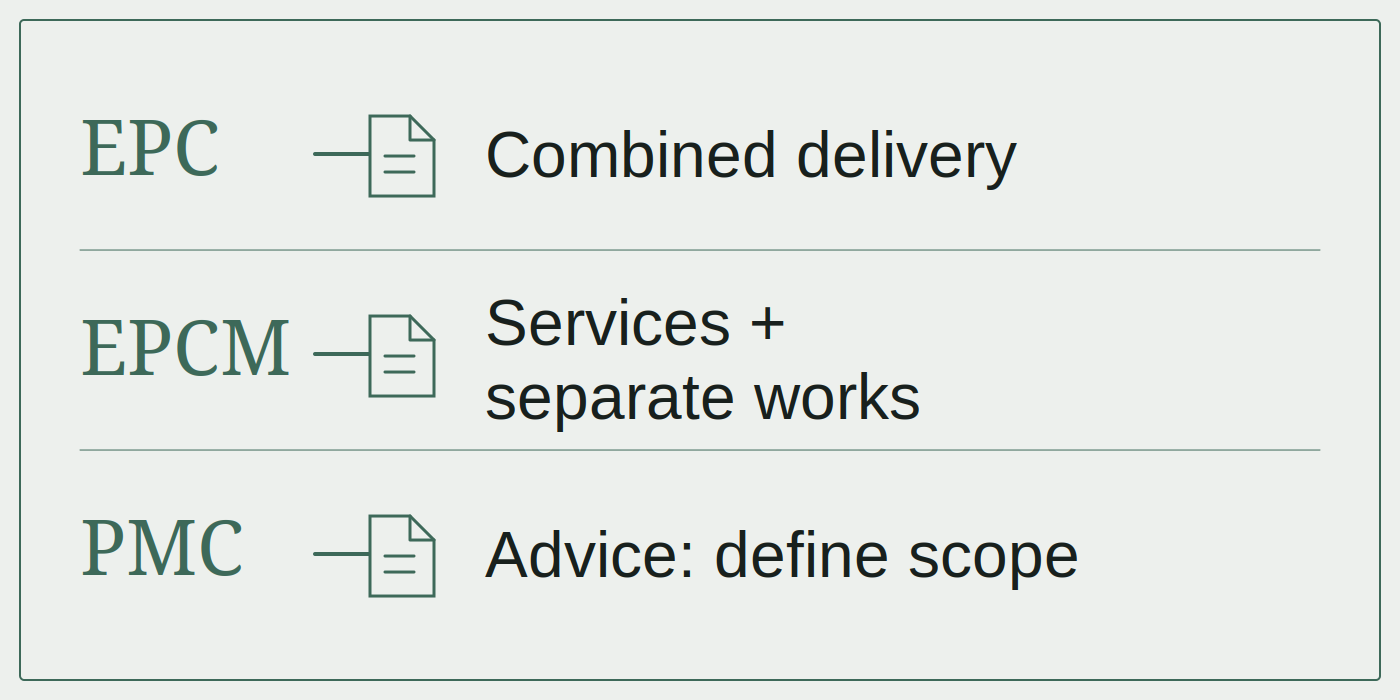
EPC Contracts: EPCM and Design-Build
Confusing delivery with management can leave scope gaps. Compare EPC, EPCM and design-build by who signs, supplies, builds and accepts the work.
Read guide
Construction Manager at Risk: CMAR, GMP and Alternatives
An unclear GMP can leave costly scope disputes. CMAR brings a builder into design while the owner keeps a separate design contract.
Read guide