
Lump Sum Construction Contracts: Types, Risk and Documents
Compare lump sum, cost-plus, GMP, unit-price and time-and-materials contracts by cost risk, and identify the documents included in a construction contract.

Signing a lump sum price on an incomplete scope can turn a “fixed” amount into a series of disputed changes. A lump sum construction contract, also called a stipulated sum contract, pays the contractor an agreed amount for identified work, so the contractor’s actual cost does not change what the owner pays unless the contract is modified or allows an adjustment.
For a US owner comparing pricing proposals, the useful question is not which contract type is best, but where the project’s uncertainty sits and who absorbs cost growth within the agreed scope. Lump sum places that cost-performance exposure mainly on the contractor; cost-plus without a cap places reimbursable cost growth mainly on the owner; a guaranteed maximum price (GMP), unit prices and time-and-materials rates each split it differently. This guide compares those five common pricing arrangements, maps them to AIA’s owner–contractor forms and lists the documents that make up the contract. It is compiled from public publisher and government sources, not from our own project testing, and it is not legal advice.
Quick Specs: what to identify before comparing pricing proposals
Scroll horizontally to see all columns.
| Input or item | Typical value or source | Why it matters |
|---|---|---|
| Scope definition | Coordinated drawings, specifications and stated assumptions | A lump sum is only as certain as the scope it prices |
| Pricing basis | Compensation article of the proposed agreement | Shows whether a sum, cost, quantity or hours drives payment |
| Reimbursable cost definition | Cost-of-the-work article and its exclusions | Sets what the owner reimburses under cost-plus or GMP terms |
| Fee basis | A stated amount, or a percentage of a stated cost base | A percentage fee rises with the cost base; a fixed fee does not |
| Maximum or ceiling | GMP amount with its assumptions, allowances and contingencies; any T&M ceiling | Limits exposure only for what it is defined to cover |
| Quantities and measurement | Schedule of unit prices, estimated quantities and measurement method | Unit-price payment follows measured quantities |
| Contract document list | The documents the agreement enumerates; under AIA A201–2017 §1.1.1, a defined set | Bid-stage material is binding only if it is listed |
| Change procedure | Amendments, change orders and other modification types | Determines how price and time are adjusted after signing |
This guide belongs to the project delivery collection, which explains how the main delivery methods differ before pricing is discussed.
What is a lump sum construction contract?
A lump sum or stipulated sum contract sets one agreed price for the work described in the contract documents. For that unchanged scope, the owner pays the same amount whether the contractor’s labor and material costs come in higher or lower than estimated. The price still changes when the contract is modified or an adjustment provision applies.
AIA Contract Documents uses “stipulated sum”, “lump sum” and “fixed price” for the same arrangement. Its description of the A201 family defines A101–2017 as the owner–contractor agreement “where the basis of payment is a stipulated sum (fixed price)”. AIA’s construction contract types article explains the cost logic: if actual costs exceed the estimate, the contractor’s profit falls; if they come in lower, it rises. Federal procurement uses the same idea: under FAR 16.202-1, a firm-fixed-price contract is not adjusted on the basis of the contractor’s cost experience.
That is why contractors usually price contingency into a stipulated sum for unforeseen conditions or scope gaps, as the same AIA article notes. The owner gains price certainty for the defined work, but does not see the contractor’s underlying costs.
| What the lump sum covers | What can still change the amount |
|---|---|
| Work shown and described in the contract documents | Owner-approved changes to that work |
| The contractor’s own cost performance on that work | Adjustment provisions the agreement includes, such as allowance or escalation terms |
| The contractor’s included contingency and profit | Errors or gaps that the change procedure treats as a change |
The certainty therefore depends on the documents. AIA’s owner-developer contracts guide says a lump sum works best when scope is well defined before construction, and that incomplete drawings, specifications or owner requirements can quickly erode that certainty through change orders. This is the same logic as the bid-on-a-complete-design sequence described in the design-build versus design-bid-build comparison.
Project size is not the deciding test. AIA describes A101 as suitable for large or complex projects; its abbreviated A104 and residential/small commercial A105 are separate forms. What matters is whether the scope is defined enough to price. Use early budget alignment to check that the owner’s budget and the documents being priced describe the same project.
Common mistake: Assuming a lump sum means “no change orders”. It fixes the price for the defined work; any scope gap or owner change still goes through the change procedure.
Takeaway: A lump sum moves cost-performance risk to the contractor only for the scope its documents define.
How do the common construction contract types compare?
Five pricing arrangements appear in most owner discussions: lump sum, cost-plus, cost-plus with a GMP, unit price and time-and-materials (T&M). They differ in what drives payment and who absorbs cost growth within the agreed scope. This is an editorial grouping of pricing bases, not an official count; delivery methods such as design-build are a separate choice.
Scroll horizontally to see all columns.
| Pricing basis | What drives payment | What must be defined first | Owner’s main exposure | Contractor’s main exposure | Record to check |
|---|---|---|---|---|---|
| Lump sum / stipulated sum | One agreed amount | Complete scope and assumptions | Changes and scope gaps | Its own cost overruns on the defined work | Priced drawings, specifications, exclusions |
| Cost-plus (no cap) | Reimbursable cost plus a fee | Cost definition and fee basis | Growth in reimbursable cost | Costs outside the reimbursable definition | Cost reports, approvals, audit rights |
| Cost-plus with GMP | Reimbursable cost plus fee, up to a maximum | Cost definition, fee, GMP and its assumptions | Cost up to the GMP; approved adjustments | Overruns above the GMP not covered by an adjustment | GMP amendment, allowances, contingencies, savings clause |
| Unit price | Agreed rate × measured quantity | Work items, rates and measurement method | Quantity growth | Cost per unit above its rate | Unit-price schedule, quantity records |
| Time-and-materials | Hourly rates plus materials | Labor categories, rates, material terms, any ceiling | Hours and materials used | Rates that do not cover its costs; amounts above any ceiling | Time records, material invoices, ceiling |
“Exposure” here means cost growth within the agreed scope. It does not cover design responsibility, schedule, site conditions or legal risk, which the agreement allocates separately.

Lists of contract “types” do not all use this axis. AIA’s article on four types of construction contracts names stipulated sum, cost-plus, design-build and integrated project delivery; two of those are pricing arrangements and two are delivery methods. Other lists add unit price, T&M or GMP. When a list mixes these, separate the payment formula from the contracting structure before comparing.
A design-build agreement, for example, still needs a pricing basis. The design-build contracts guide shows how AIA, DBIA and ConsensusDocs publish lump-sum and cost-plus/GMP versions for that delivery method; what design-build means for an owner explains the delivery side.
Takeaway: Compare pricing proposals by payment driver and cost-growth exposure first; treat delivery method as a separate decision.
What is the difference between cost-plus and lump sum?
A cost-plus contract reimburses the contractor’s defined cost of the work and adds a fee; a lump sum pays an agreed amount regardless of actual cost. Without a cap, the owner absorbs increases in reimbursable cost, gains any savings, and needs the records to verify what is being paid.
AIA describes cost-plus as common when scope is not fully defined or construction must start before design is complete. Its owner-developer guide adds that cost-plus requires more active owner oversight than a stipulated sum: clear cost reporting, documentation procedures, audit rights and approval processes. AIA’s A103–2017 is its owner–contractor form for cost of the work plus a fee without a GMP, described for large projects where cost is not fully known at the start of construction.
“Cost” means the reimbursable cost defined in the agreement, not every expense the contractor incurs. The definition and its exclusions are therefore the first document to read.
How the fee form changes the total
The fee is usually expressed in one of two ways, as AIA’s article on contract types lists:
- Percentage fee: total payment = C + (p × C), where C is the reimbursable cost and p is the percentage the contract applies to its stated cost base. The fee rises as C rises.
- Fixed fee: total payment = C + F, where F is an agreed amount. The fee does not move with C, but the total still does.
A fixed fee can also be adjusted when the work changes. The federal definition of a cost-plus-fixed-fee contract in FAR 16.306 says the fee does not vary with actual cost but may be adjusted for changes in the work. Private agreements set their own fee-adjustment terms.

Records the owner should expect to review under cost-plus:
- the cost-of-the-work definition, including what is excluded;
- the fee basis and how it changes with changed work;
- cost reports and supporting invoices or payroll records;
- approval steps for subcontracts, purchases and changes;
- audit or inspection rights and how long records are kept.
The costs and planning collection covers budget preparation before these records exist.
Common mistake: Reading “fixed fee” as a fixed contract price. Only the fee is fixed; reimbursable costs, and therefore the total, can still rise.
Takeaway: Under cost-plus, read the cost definition and fee basis before the estimate, because they determine what the owner will actually reimburse.
What does a GMP cap, and what does it leave open?
A guaranteed maximum price is a cost-plus arrangement with a ceiling on the cost of the work plus the fee. The owner pays actual reimbursable costs and fee up to that ceiling, not the ceiling itself. Approved changes or other agreed adjustments can move the GMP, and savings are handled as the agreement states.
AIA’s GMP guide puts it directly: do not treat the GMP as the contract price. If actual reimbursable costs exceed the GMP and the overrun is not covered by an approved change or other contract adjustment, the contractor is generally responsible for the difference. If the project costs less, the contract decides whether savings return to the owner or are shared.
A GMP is often agreed before the construction documents are complete. AIA notes that it should therefore carry assumptions, allowances, contingencies and pricing qualifications for the undefined parts of the work, and that setting the GMP too early often increases contingency, which can raise the maximum. The cap is only as protective as those inputs.
Scroll horizontally to see all columns.
| GMP item to review | Why it matters | Where it usually sits |
|---|---|---|
| Estimated cost of the work and fee | Shows how the maximum was built | GMP proposal or amendment |
| Assumptions and qualifications | Define what the GMP does not yet include | GMP amendment and its attachments |
| Allowances and contingencies | Show who controls them and what happens to unused amounts | GMP amendment; agreement terms |
| Reimbursable cost definition | AIA notes many GMP disputes arise from unclear cost definitions | Cost-of-the-work article |
| Change and adjustment procedure | Determines when the GMP itself moves | General conditions; agreement |
| Savings provision | Decides who keeps the difference below the GMP | Agreement |
| Cost reporting and payment records | Payment is based on documented cost | Agreement; payment application forms |
The GMP covers the contract’s cost of the work plus fee. It is not a cap on land, financing, owner consultants or other costs outside that contract.
AIA’s A102–2017 is the owner–contractor form for cost of the work plus a fee with a GMP, which AIA describes as not intended for competitive bidding. In construction manager at risk delivery the GMP is often negotiated during design; the CMAR guide explains that transition, and the progressive design-build guide shows a design-build sequence in which the price is agreed after design development.
Common mistake: Budgeting the full GMP as the expected cost, or assuming everything up to the GMP is automatically payable. Payment is actual reimbursable cost plus fee, supported by records.
Takeaway: Review a GMP’s assumptions, exclusions and adjustment terms; the ceiling protects only the scope those documents define.
When do unit-price and time-and-materials contracts fit?
Unit-price and T&M contracts suit work whose type is known but whose quantity or duration is not. Unit pricing pays agreed rates for measured quantities, so the owner carries quantity growth. T&M pays hourly rates plus materials, so the owner carries the hours used unless a ceiling applies.
Unit price
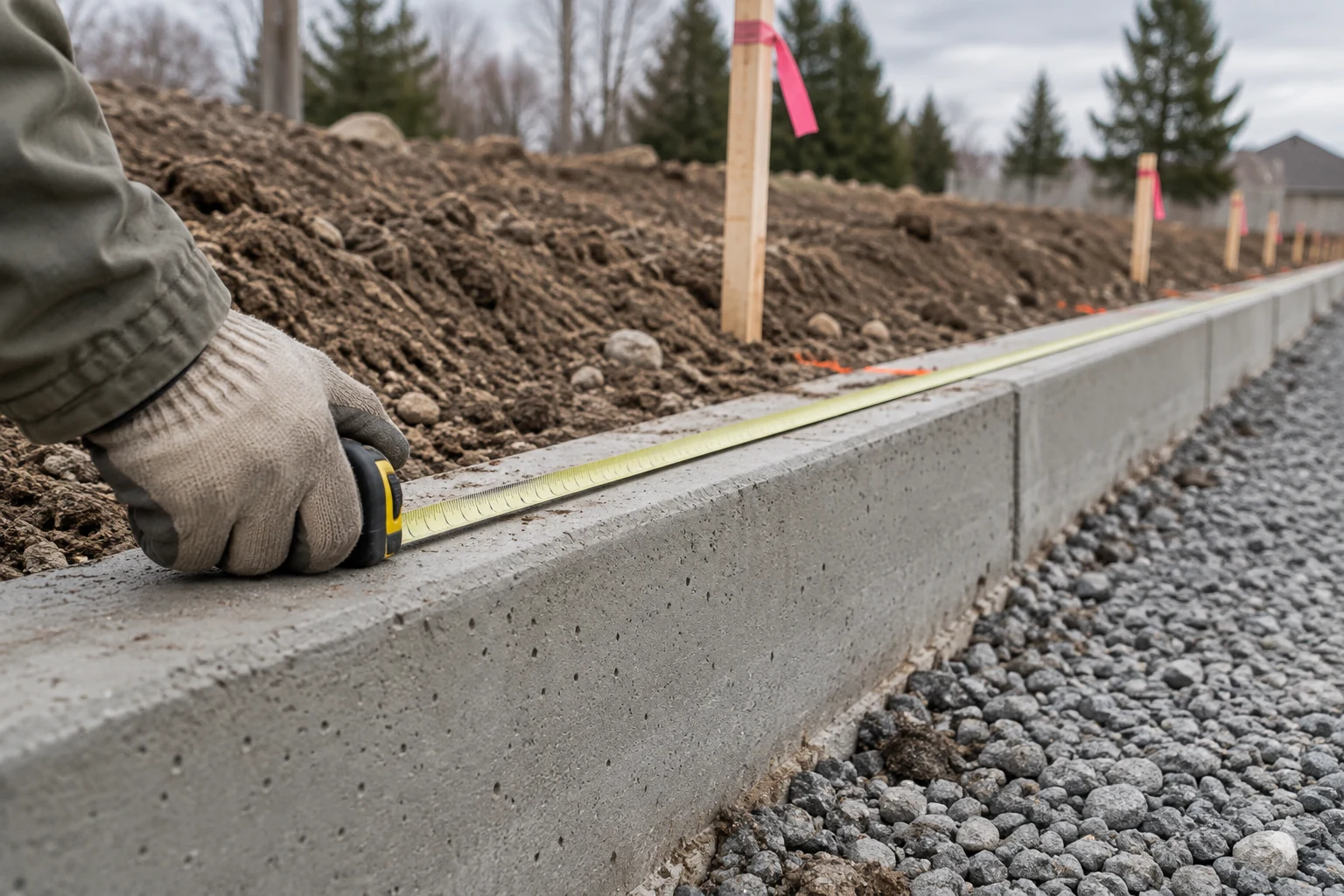
Under unit pricing, total payment = the sum of (agreed rate × payable quantity) for each work item. The contractor carries the risk that its cost per unit exceeds the rate; the owner carries the risk that more units are needed than estimated. Measurement rules and any repricing provisions for large quantity changes can alter that split, so read them alongside the rates.
The Federal Highway Administration’s ID/IQ guidance (updated January 24, 2025) gives a public example: contractors bid unit prices for estimated quantities of standard work items, and work orders then define the location and quantities of specific work. That describes a federal-aid highway procurement method, not every unit-price contract.
Time-and-materials
Federal acquisition rules give the clearest public definition. Under FAR 16.601, a T&M contract pays direct labor hours at fixed hourly rates that include wages, overhead, general and administrative expenses and profit, plus the actual cost of materials. The FAR limits its use to work whose extent or duration cannot be estimated accurately, requires government surveillance because the arrangement gives the contractor no positive profit incentive to control cost, and requires a ceiling price that the contractor exceeds at its own risk.
Those are federal requirements. A private T&M agreement may define eligible hours, material markup and any ceiling differently, or have no ceiling at all, so check each one in the proposed text.
Records to keep for both arrangements: daily quantity or time records signed by the owner’s representative, the rate schedule in force, material invoices, and the ceiling or estimate and how it is tracked. The preconstruction risk checklist helps identify which site uncertainties make quantities or hours hard to estimate in the first place.
Takeaway: Use unit price or T&M where quantity or duration is the unknown, and plan the measurement and time records before work starts.
Which pricing basis matches the uncertainty on your project?
Start from the question you cannot yet answer. If the scope is settled, a lump sum can price it. If quantities are unknown, unit prices separate rate from quantity. If hours are unknown, T&M with a ceiling may fit. If cost is unknown, cost-plus applies, with a GMP once scope is developed enough to cap.
Scroll horizontally to see all columns.
| If the open question is… | Pricing basis often discussed | Records needed before signing |
|---|---|---|
| Nothing material: scope is defined and coordinated | Lump sum / stipulated sum | Complete drawings and specifications, exclusions, allowances, change procedure |
| How much of a known work item will be needed | Unit price | Work-item list, unit rates, estimated quantities, measurement method |
| How long a defined service or repair will take | Time-and-materials | Labor categories, hourly rates, material terms, ceiling, time-record approval |
| What the work will cost while design continues | Cost-plus without a GMP | Cost definition, fee basis, reporting and audit rights, approval thresholds |
| Final cost, but scope is developed enough to set a maximum | Cost-plus with GMP | GMP assumptions, allowances, contingencies, exclusions, savings clause |
Some agreements combine bases: a lump sum agreement may list unit prices for specified items or for pricing changes, and AIA’s progressive design-build form pays preliminary services on an agreed basis before a GMP is set, as the design-build contracts guide describes. Record which basis applies to which part of the work.
The table is an editorial aid derived from the payment mechanisms above, not a rule. It does not account for procurement law, financing conditions or the owner’s capacity to review cost records, each of which can rule out an option. Use early budget alignment to test the budget against whichever basis you are considering.
Takeaway: Name the uncertainty first, then choose the pricing basis whose records you can actually maintain.
What are the contract documents in a construction contract?
Under AIA A201–2017, the contract documents are those enumerated in the agreement: the agreement, the conditions of the contract, drawings, specifications, addenda issued before signing, other listed documents and modifications issued after signing. Certain bidding materials, such as the invitation to bid, instructions to bidders and the contractor’s bid, are excluded unless the agreement lists them. Other forms define the set in their own terms.
AIA quotes the A201–2017 §1.1.1 definition in its article on construction contract mistakes. Under that definition, the contract documents consist of:
- The agreement between owner and contractor, which enumerates the other documents.
- Conditions of the contract: general, supplementary and other conditions.
- Drawings.
- Specifications.
- Addenda issued before the contract was signed.
- Other documents listed in the agreement.
- Modifications issued after signing.
A201 defines four kinds of modification: a written amendment signed by both parties, a change order, a construction change directive, and a written order from the architect for a minor change in the work. Addenda and modifications are therefore different things: addenda change the documents before signing; modifications change the contract afterwards.
Unless specifically listed in the agreement, the same definition excludes the advertisement or invitation to bid, instructions to bidders, sample forms, other information the owner provided in anticipation of bids or proposals, the contractor’s bid or proposal, and the portions of addenda relating to bidding or proposal requirements. The drawings and specifications that were priced are not in that excluded list; they are part of the set as drawings and specifications. Under this definition, assumptions stated only in the contractor’s proposal are not contract documents unless the agreement lists the proposal. For a non-AIA or heavily modified agreement, check its own incorporation clause rather than assuming the A201 list applies.

Build a document index before signing and keep it current:
Scroll horizontally to see all columns.
| Document | Edition or revision | Incorporated? | What it defines | Question for counsel |
|---|---|---|---|---|
| Agreement | Form, edition year and modification list | Yes, by signature | Parties, price basis, time, enumerated documents | Do the listed documents match the set we hold? |
| General conditions | Form and edition | If enumerated | Change, payment, claims and termination procedures | Are any standard provisions deleted or replaced? |
| Supplementary conditions | Project-specific revision | If enumerated | Changes to the general conditions | Which general conditions do they alter? |
| Drawings | Sheet list with revision dates | If enumerated | Physical scope | Is the priced revision the one listed? |
| Specifications | Section list with revision dates | If enumerated | Materials, quality and procedures | Do specifications and drawings conflict anywhere? |
| Addenda | Numbers and dates issued before signing | If enumerated | Pre-signing changes to the bid documents | Are all addenda acknowledged and listed? |
| Proposal or qualifications | Date | Only if enumerated | Contractor’s assumptions and exclusions | Should any qualification be incorporated or rejected? |
| Modifications | Number, date and type | After signing | Changes to scope, price or time | Who signed, and what price and time effect was agreed? |
In design-build packages the exhibit names and document families differ; the design-build contracts guide maps those exhibits by form.
Takeaway: Read the agreement’s enumeration first, then confirm that every listed document, revision and addendum is in the set you are relying on.
Which AIA forms match each pricing basis?
AIA’s conventional owner–contractor agreements follow the pricing bases: A101 for a stipulated sum, A102 for cost of the work plus a fee with a GMP, and A103 for cost plus fee without a GMP. Each adopts A201–2017 as its general conditions. A104 is an abbreviated stand-alone form for limited-scope projects.
Scroll horizontally to see all columns.
| AIA form (2017 edition) | Pricing basis in AIA’s description | AIA’s stated positioning | General conditions |
|---|---|---|---|
| A101–2017 | Stipulated sum (fixed price) | Suitable for large or complex projects | Adopts A201–2017 by reference |
| A102–2017 | Cost of the work plus a fee, with a GMP | Large projects requiring a GMP; not intended for competitive bidding | Adopts A201–2017 by reference |
| A103–2017 | Cost of the work plus a fee, without a GMP | Large projects where cost is not fully known at the start of construction; not intended for competitive bidding | Adopts A201–2017 by reference |
| A104–2017 | Stipulated sum, or cost plus fee with or without a GMP | Projects of limited scope and complexity | Contains its own general conditions |
Source: AIA Contract Documents’ A201 family description and list of current documents, checked October 10, 2026. These are the publisher’s descriptions of form purpose, not a review of the full licensed text or a recommendation for a particular project.
AIA’s GMP guide also identifies A133 for a construction manager as constructor (CMc) with a GMP, the arrangement the CMAR guide covers. Design-build has its own A141 family, compared in the design-build guide linked above.
Takeaway: Match the form number to the pricing basis and edition, and confirm that the general conditions it assumes are actually in the package.
When this does not apply
This comparison describes pricing mechanics and publicly described US forms. It does not determine which contract a particular owner can or should sign.
- Public and federal procurement: agencies follow their own authorized contract types and prescribed documents. The FAR and FHWA material above is cited as a reference definition, not as a rule for private projects.
- Home improvement and residential work: state consumer and licensing rules may require specific contract content; ask project counsel which apply.
- Projects outside the US: forms, terminology and law differ.
- Delivery-method choices: whether design and construction sit in one contract is a separate decision, covered for building projects by the design-build guides above and for industrial projects by the EPC and EPCM comparison.
- Signed or heavily modified forms: the actual text and its modifications control, not a publisher’s catalogue description.
Takeaway: Use this guide to frame questions, then have the proposed agreement reviewed against the project’s jurisdiction and procurement rules.
Frequently asked questions
Is lump sum the same as stip sum?
Yes, in normal US usage: AIA Contract Documents treats “stipulated sum”, “lump sum” and “fixed price” as the same arrangement. See what a lump sum construction contract covers for what can still change the amount.
What are the disadvantages of a lump sum contract?
The owner pays for contingency priced into the sum, sees little of the contractor’s actual cost, and still pays for changes when the scope documents are incomplete. Lump sum also needs design to be developed before pricing, which can delay the start compared with cost-based arrangements.
What are the four types of construction contracts?
There is no single official list of four, or of five. AIA’s four-type list mixes pricing arrangements with delivery methods, and other authors count differently; the comparison of common contract types explains how to separate the two before comparing.
Which type of construction contract is most commonly used?
AIA Contract Documents describes the stipulated sum as the most common form of owner–contractor agreement. We found no national survey that measures contract-type shares, so treat that as the publisher’s description rather than a statistic, and choose by scope readiness rather than popularity.
What is a provisional sum in a construction contract?
A provisional sum is a cost allowance the client inserts in the tender documents for elements of the work that cannot be defined in enough detail for tenderers to price accurately, as New Zealand Government Procurement’s lump sum contract information sheet defines it. After award, the sum is firmed up as design information becomes available and the lump sum price is adjusted. The term does not appear in the US sources behind this guide; the comparable AIA item is an allowance, which AIA lists among the items a GMP should carry for work not yet fully defined. Whatever the label, check the amount, what it covers, who controls it, and how the agreement reconciles it to actual cost.
Is A101 normally paired with A201 on private projects?
A101 and A201 are designed to be used together; AIA describes A101–2017 as adopting A201–2017 by reference, as the AIA form table shows. Before signing, confirm that the A201 edition in the package matches the agreement’s edition and that any supplementary conditions are listed in the agreement.
Are AIA forms usually modified?
We found no evidence on how often or how heavily AIA forms are modified, so the extent depends on the project and the parties. A201–2017 provides for supplementary and other conditions within the contract documents, which is one place changes appear. Ask for a redline or change record against the published edition, check every deleted or replaced provision, and have project counsel review the modified text.
Is there a construction contracts PDF or PPT for these types?
This page is a web guide and does not offer contract templates or slide decks. Publisher forms such as AIA’s are licensed through AIA Contract Documents; obtain the current edition there and review it with project counsel.
Related reading
- Design-build contracts: forms and checklist — match lump-sum and GMP design-build forms to the right parties and exhibits.
- Construction manager at risk — see how a GMP is negotiated during design under CMAR.
- Early budget alignment — check the owner’s budget against the scope being priced.
- Preconstruction risk checklist — record the site and information uncertainties that affect the pricing basis.
Method and sources
This comparison is compiled from public publisher and government descriptions. It is not based on our own project testing, a full review of licensed contract texts, or state-law analysis. The pricing comparison, fee formulas and decision table are editorial organizations of the mechanisms described in the sources. No fee rates, prices or contingency percentages are given because none were verified.
Sources checked October 10, 2026:
- AIA Contract Documents, Conventional (A201) Family, Design Bid Build — A101, A102, A103, A104 and A105 descriptions.
- AIA Contract Documents, List of All Current AIA Contract Documents — edition cross-check for A101–A104.
- AIA Contract Documents, 4 Types of Construction Contracts Explained — stipulated sum and cost-plus explanations, fee forms, four-type grouping.
- AIA Contract Documents, Guaranteed Maximum Price (GMP) Contracts — GMP operation, overruns, savings and documentation.
- AIA Contract Documents, Owner Developer Construction Contracts Guide — payment structure selection and owner oversight.
- AIA Contract Documents, 7 Construction Contract Mistakes to Avoid (2022) — quoted A201–2017 §1.1.1 contract documents definition.
- Federal Acquisition Regulation 16.202-1, 16.306 and 16.601, FAC 2026-01 (effective March 13, 2026) — federal definitions of firm-fixed-price, cost-plus-fixed-fee and time-and-materials contracts.
- Federal Highway Administration, ID/IQ Contracting for Federal-aid Construction (updated January 24, 2025) — unit-price example.
- New Zealand Government Procurement, Lump Sum Contract information sheet (October 2019) — provisional sum definition, cited outside US practice.
Last updated October 10, 2026.
Related guides
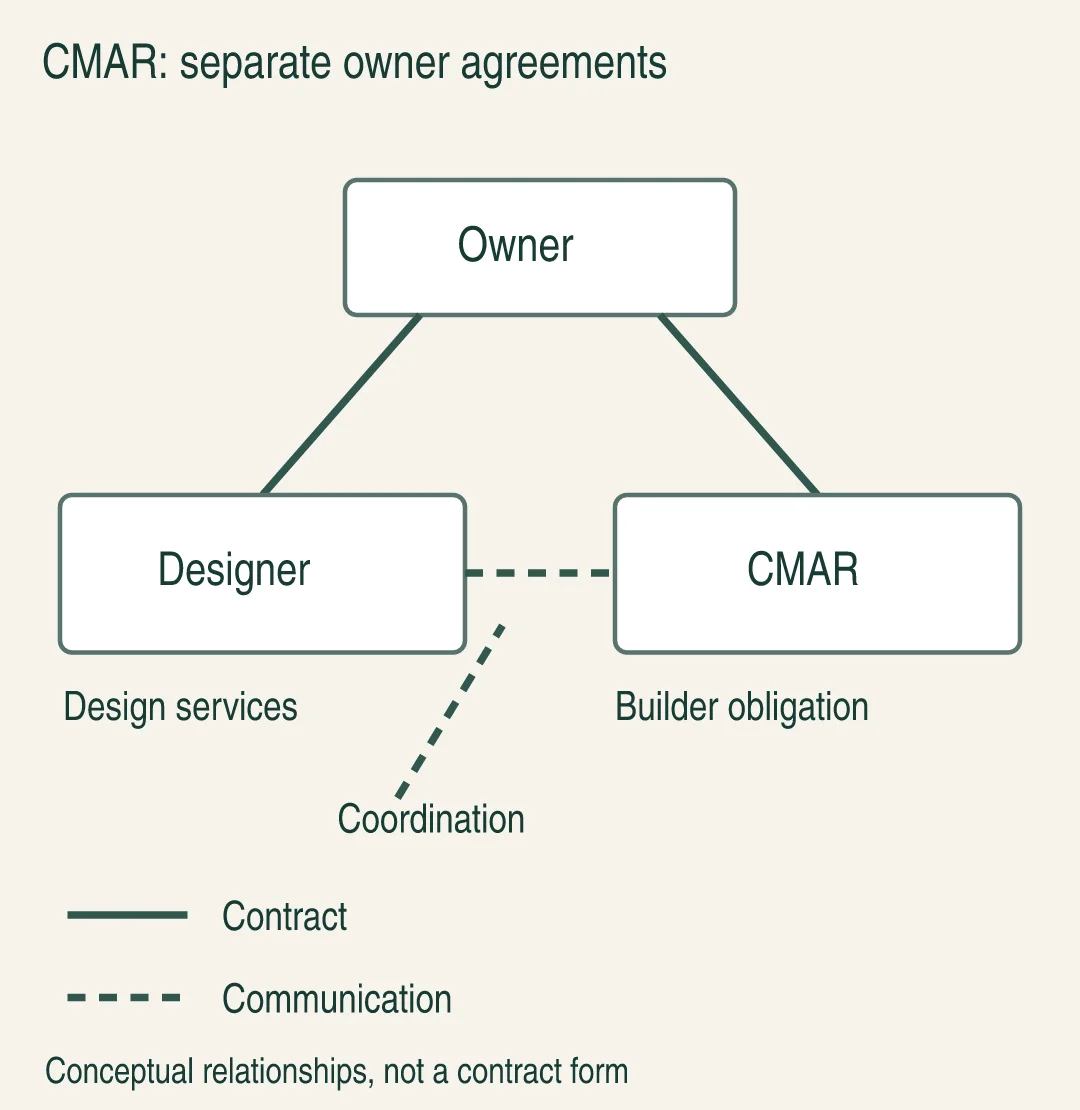
Construction Manager at Risk: CMAR, GMP and Alternatives
An unclear GMP can leave costly scope disputes. CMAR brings a builder into design while the owner keeps a separate design contract.
Read guide
Progressive Design-Build vs Traditional Design-Build
How progressive design-build works: two-phase contracting, open-book pricing, what the owner can do if the Phase 2 price is rejected, and who owns the design work product.
Read guide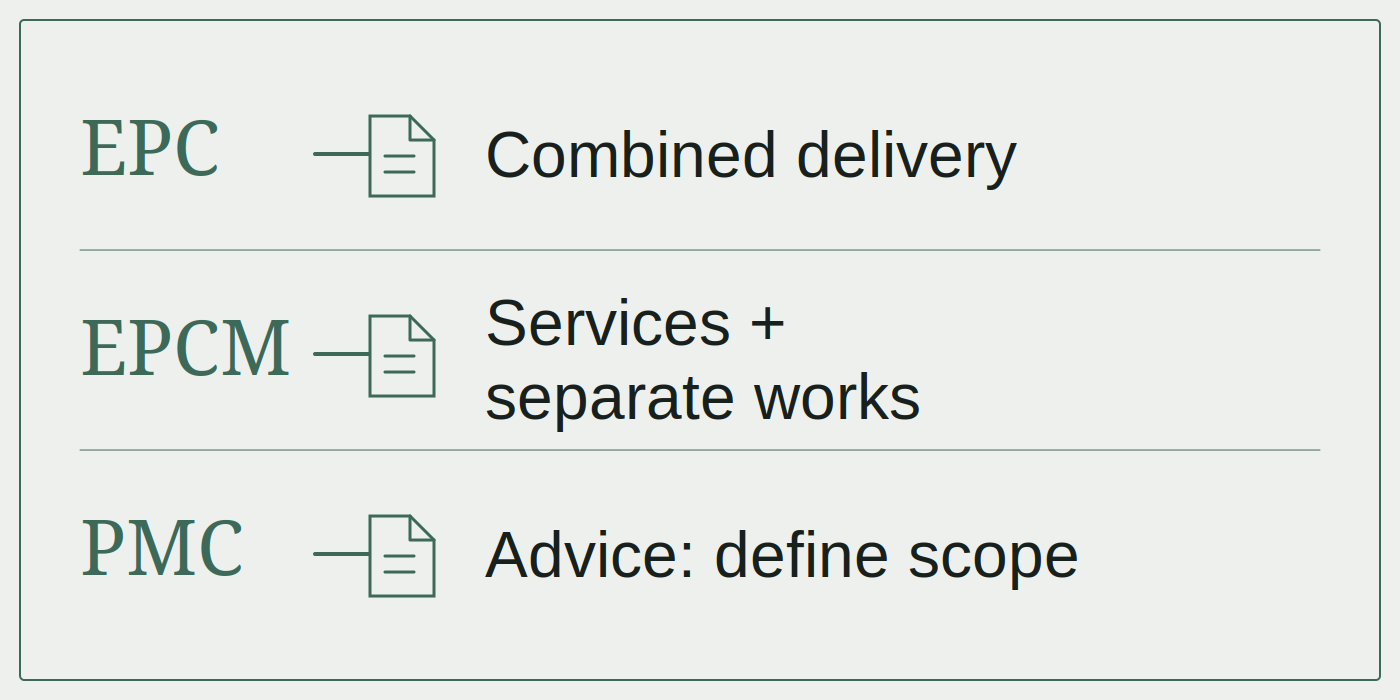
EPC Contracts: EPCM and Design-Build
Confusing delivery with management can leave scope gaps. Compare EPC, EPCM and design-build by who signs, supplies, builds and accepts the work.
Read guide