
EPC Contracts: EPCM and Design-Build
Confusing delivery with management can leave scope gaps. Compare EPC, EPCM and design-build by who signs, supplies, builds and accepts the work.
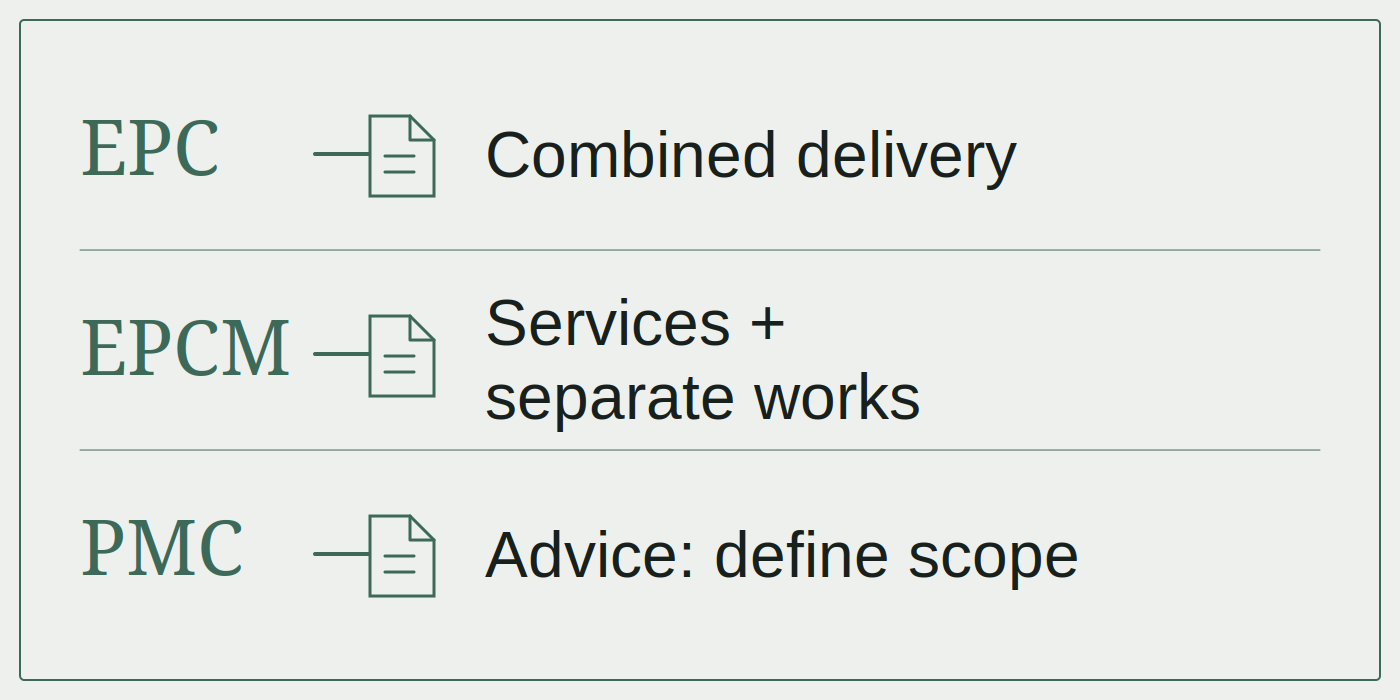
Confusing management services with construction delivery can leave costly scope gaps. An EPC contract combines engineering, procurement and construction; EPCM provides engineering, procurement and construction-management services, while the works are contracted separately.
For an owner comparing EPC, EPCM and design-build, start with who signs the works contracts and what completion means. This guide uses EPC primarily in its industrial and energy-project context, rather than as the typical contract for ordinary building construction. It translates that terminology into questions a building owner can use: who designs, who buys equipment, who builds, who coordinates interfaces, and who accepts the result? The comparison is compiled from public sources, not a report of projects or tests performed by this publication. Actual responsibilities come from the project agreements.
Quick Specs: inputs for the comparison
Scroll horizontally to see all columns.
| Input or item | Typical value or source | Why it matters |
|---|---|---|
| Contracting parties | Proposed agreements and signature blocks | Distinguishes a delivery contractor from a service provider |
| Engineering and works scope | Scope schedules and employer’s requirements | Identifies the promised result and exclusions |
| Equipment and trade packages | Procurement plan and contract map | Shows who holds each purchase or works contract |
| Completion and acceptance | Proposed testing and handover provisions | Defines what the owner will accept |
| Owner’s retained role | Authority and responsibility schedules | Shows decisions and interfaces still needing owner action |
Use these inputs alongside the project-delivery overview before comparing proposal labels.
What does an EPC contractor do?
An EPC contractor undertakes engineering, procurement and construction within its agreed scope. CMAA’s delivery-method guide describes EPC as similar to design-build in its combined responsibility for design, procurement and final handoff. The useful distinction is the delivery obligation; the acronym alone does not identify every retained owner duty. CMAA, printed page 12.
For reading a proposal, separate the three parts:
- Engineering: identify the design deliverables and the requirements they are meant to satisfy. Ask which existing information the proposal relies on and which design decisions remain open.
- Procurement: identify the equipment, materials and services included. Ask who signs each purchase agreement and where the supply scope ends.
- Construction: identify installation and works boundaries. Ask how testing, handover and the owner’s acceptance connect to the construction scope.
This is a reading aid, not a statement that every EPC contract contains identical obligations. Record each answer against a document reference rather than treating a sales summary as the complete scope.
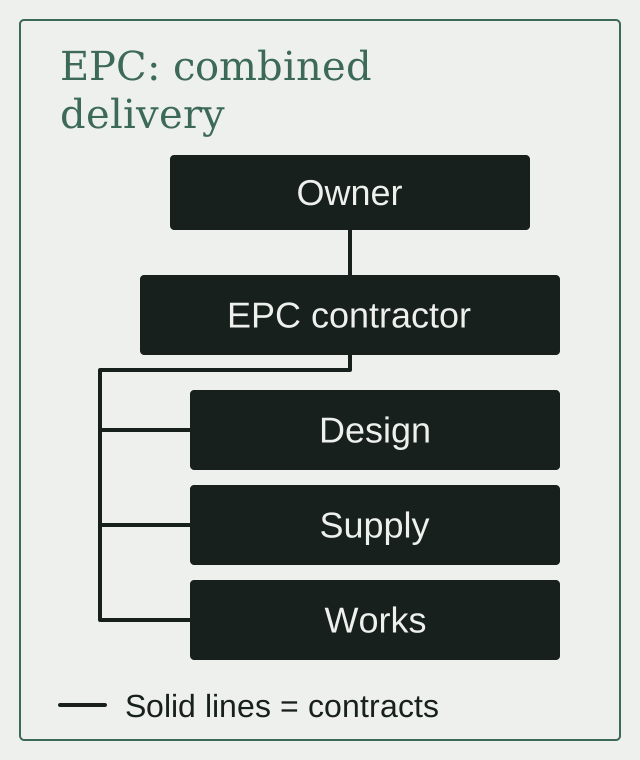
The owner also needs a way to check the result. Start with the inputs in the preconstruction risk checklist and ask your project team to assign each missing item. A single delivery counterparty does not answer an unanswered question about site access, owner-supplied information or acceptance.
Takeaway: Read the EPC scope as a promised result with boundaries, then identify the owner’s remaining decisions.
EPC vs EPCM vs PMC: who holds the contracts?
EPC combines delivery; EPCM means engineering, procurement and construction management services. IChemE describes its EPCM form as a services contract with separate works contracts. In this guide, PMC means project management consultancy: an advisory or management appointment whose scope needs defining, rather than a fixed third form of construction delivery.
IChemE’s Blue Book guidance supports the EPCM services distinction. CMAA’s agency-CM and EPC discussion supports separating owner-side management from the builder’s delivery responsibility; it does not standardize the acronym PMC.
Scroll horizontally to see all columns.
| Arrangement | Delivery or service role | Works contracts in the arrangement shown | Owner’s review question |
|---|---|---|---|
| EPC | Combined engineering, procurement and construction | Held below the EPC contractor | Which scope and interfaces are outside that commitment? |
| EPCM | Engineering, procurement and construction-management services | Separate from the EPCM services appointment; held by the owner in this illustration | Who signs, instructs and pays each works package? |
| PMC, as defined here | Project-management advice or coordination within an agreed scope | Determined by the underlying delivery arrangement | Does the appointment include design or procurement services, or only management? |
The EPCM diagram below illustrates an owner holding separate package contracts. Treat it as a structure to check against a proposal, rather than as a rule for all contracts bearing that name. A service provider’s authority to issue instructions or act for the owner needs its own review.
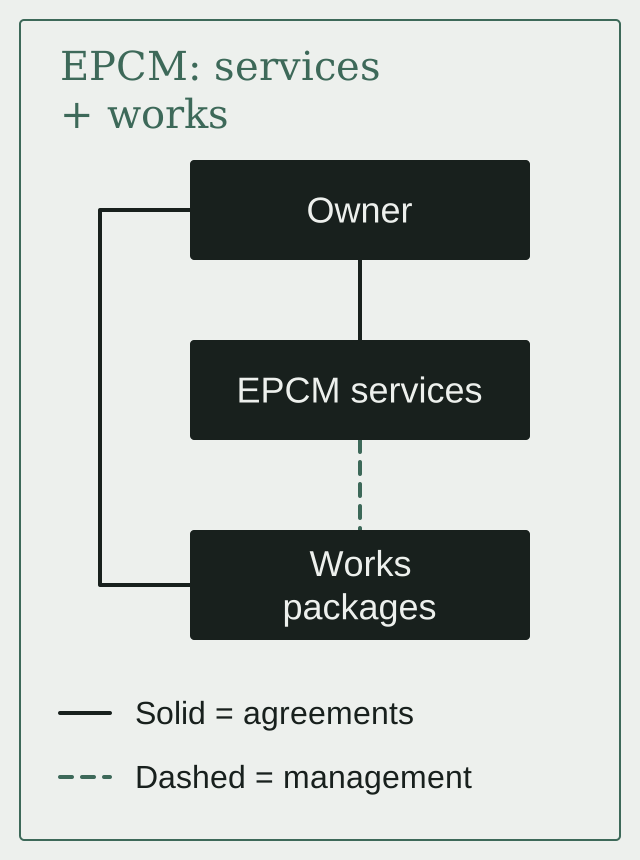
A useful test for a PMC proposal is to list the verbs in its scope: advise, review, coordinate, approve, procure, design or construct. Ask the proposer to identify the document giving it each authority. Do not infer a construction obligation from the words “manage the project.”
For a building project, also distinguish these services from a builder appointed under construction manager at risk. That guide explains the separate design contract and later construction commitment. A management title can describe quite different relationships.
Common mistake: Reading the M in EPCM as extra protection on top of an EPC construction commitment. First check whether the appointment is for services or for delivery of the works.
Takeaway: Draw the signature relationships before comparing job titles or management functions.
How does EPC relate to design-build?
EPC and design-build share a combined design-and-construction responsibility concept. DBIA defines design-build by the owner’s single contract for design and construction, including building projects. EPC terminology in this guide emphasizes the engineering, procurement and completion of an industrial or energy facility; it does not establish a universally different legal category.
The DBIA definition is the starting point for the building-project comparison. Our owner’s guide to design-build explains the architect’s relationship and the owner’s choices in more detail.
Scroll horizontally to see all columns.
| Building-owner comparison | Contract structure to identify | Question still requiring project documents |
|---|---|---|
| EPC | Combined engineering, procurement and construction delivery | What equipment, process scope and completion criteria are included? |
| Design-build | Combined design and construction | What design requirements, price basis and acceptance provisions apply? |
| Design-bid-build | Separate design and construction appointments | How are the completed design and construction contract coordinated? |
Delivery structure and pricing are separate questions. Do not translate “single contract” into “price already fixed,” or assume that an early estimate is the construction commitment. Use the design-build and design-bid-build comparison to examine design control and contractual relationships.
When the immediate issue is developing design and price before the construction commitment, the progressive design-build guide covers that decision. It belongs to a different comparison from whether a service provider holds the works contracts.
For an ordinary building project, begin with the building’s requirements and the available delivery methods. If a proposer uses EPC language, ask it to map that language to the proposed design, procurement and construction obligations. The task is to understand the offer, not to assume that industrial terminology makes it more complete.
Takeaway: Compare the contract structure, scope and price-setting point independently of the label.
What should an owner check in an EPC contract?
Check the promised result, the interfaces and the acceptance process together. The table below is an editorial review aid for discussions with the project team and legal advisers. It identifies questions to resolve; it is not a contract template, a list of mandatory FIDIC terms or advice about enforceability.
Scroll horizontally to see all columns.
| Document or topic | Question to put to the project team | Record to retain |
|---|---|---|
| Scope and requirements | What result is included, and which items are excluded? | Scope reference and unresolved requirements |
| Design information | Which inputs are supplied by the owner, and how are assumptions checked? | Input register with responsibilities |
| Supply and works boundaries | Who is responsible at each equipment or package interface? | Contract map and interface notes |
| Price and payment | What does the quoted amount cover, and what is the proposed payment basis? | Pricing reference and exclusions |
| Programme and access | Which dates rely on an owner decision, access or another package? | Decision and dependency record |
| Change procedure | Who can request, assess and authorize a change? | Authority and document-control references |
| Testing and acceptance | What evidence will demonstrate completion and who reviews it? | Proposed acceptance record |
| Handover information | Which records and instructions will the owner receive? | Deliverables list and responsible party |
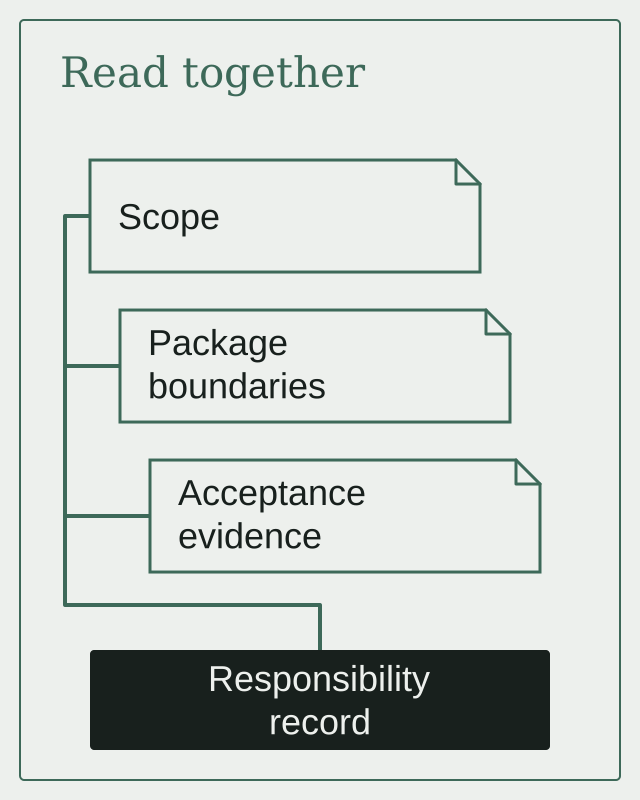
For example, as an illustrative review question, ask who supplies the equipment, who installs it and who records that it meets the agreed acceptance criteria. If the answers sit in different documents, have the team show how those documents connect. This is a hypothetical situation, not a customer case or a proposed allocation of liability.
Keep the early budget-alignment inputs separate from the quoted contract amount. A budget discussion can identify missing scope, but it does not determine whether an item is included in a signed agreement. Ask for the scope reference before comparing totals.
Common mistake: Treating “turnkey” as the acceptance specification. Write down the result and evidence to be reviewed, including any owner-supplied inputs, rather than relying on that word alone.
Takeaway: Resolve scope, interface and acceptance questions before treating a proposal as a complete delivery commitment.
Where can you find the FIDIC Silver Book?
Use FIDIC’s official Silver Book page to identify the EPC/Turnkey form and its publication details. FIDIC describes the second edition as published in 2017 and directs readers to the 2022 reprint with amendments. Check the edition named in your proposed agreement.
The public description distinguishes General Conditions from Particular Conditions, including Contract Data and Special Provisions. Reviewing a project therefore calls for the project-specific documents as well as the standard form. An isolated sample clause does not establish the complete allocation of responsibility.
If your search is for an “EPC contract template” or “EPC contract PDF,” follow the official publisher route. This guide provides no copied contract text or substitute download. Ask the project advisers which form and edition they intend to use, and which project-specific documents accompany it.
Takeaway: Verify the publisher, edition and project-specific conditions before relying on a contract copy.
Which arrangement fits the owner’s next decision?
Start by recording whether the owner wants a combined delivery appointment or services supporting separate works contracts. Then test whether the requirements and the owner’s decision-making capacity support that arrangement. This is a preparation sequence for a project discussion, not an automatic recommendation or a ranking of delivery methods.
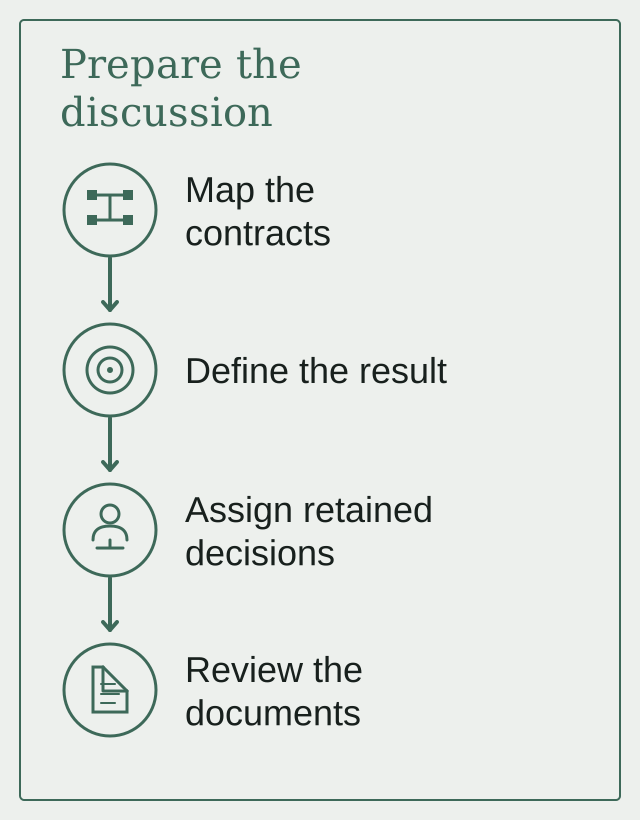
Use the following conditional starting points:
- If the proposal promises combined delivery: ask for the included result, exclusions and acceptance criteria before discussing whether EPC or design-build is the better description.
- If the proposal is for EPCM services: map the separate works contracts and ask who will manage the owner’s decisions and package interfaces.
- If the proposal is for PMC services: define the advisory scope and authority first, then identify the underlying delivery contracts.
- If design and scope are still developing: ask when the construction price becomes a commitment. For building projects, review the progressive pricing and off-ramp discussion before assuming an early price solves that uncertainty.
Prepare a short working record for your project team:
Scroll horizontally to see all columns.
| Record | What to capture | Next question |
|---|---|---|
| Contract map | Parties and proposed signature relationships | Is a package missing from the map? |
| Result and boundaries | Required outcome and scope exclusions | Who resolves the open interface? |
| Owner decisions | Input, decision-maker and required timing | Can the owner provide the decision? |
| Acceptance evidence | Proposed checks and deliverables | Who reviews and records acceptance? |
Use the preconstruction meeting checklist to bring these unresolved items into a team discussion. The output should be a list of named decisions and document references that can be checked by the relevant advisers.
Takeaway: Choose the next review action from the missing evidence, then evaluate the delivery arrangement.
When this does not apply
This comparison does not interpret a particular contract, establish procurement authority or determine legal liability. Local law, funding conditions and project-specific agreements need separate review. A building owner should not transplant a process-plant services form or an EPC/turnkey label into a residential project without checking its suitability.
FIDIC’s Silver Book description identifies unsuitable circumstances: insufficient tender information or time; substantial underground or otherwise uninspectable work without special provisions; and an employer intending close control of the work or extensive drawing review. FIDIC points to its Yellow Book for those circumstances. These are limitations of that form, not a ban on all EPC arrangements.
For the owner’s design-control decision, return to the comparison of building delivery methods. The contract maps here omit project-specific details and do not determine insurance coverage, damages, change entitlement or which party has legal authority to sign for another.
Takeaway: Use the diagrams to ask better questions, then check the actual form, project conditions and applicable rules.
Frequently asked questions
What does EPC contract mean?
It means engineering, procurement and construction. Before interpreting an acronym in a document, check its definition there: this guide uses the construction-delivery meaning. It does not use EPC to mean an energy performance contract, which is a different subject.
What are the key differences between an EPC contract and a turnkey contract?
The terms can overlap: FIDIC calls its Silver Book an EPC/Turnkey form. Instead of assuming two exclusive categories, ask what the proposed “turnkey” result includes and what evidence establishes completion. The label does not replace the scope and acceptance documents.
What is EPC vs EPCM?
The key reading test is delivery versus management services. Follow the signature lines: identify the EPC or EPCM appointment, then locate the works contracts. If the proposal is a hybrid, ask the team to explain the structure rather than forcing it into the diagrams.
What are the downsides of using an EPC contract?
Start with suitability, rather than a universal disadvantages list. If tender inputs are incomplete or the owner wants extensive control, ask advisers whether the proposed form fits. FIDIC’s published Silver Book limitations provide concrete issues to raise; they do not resolve the project decision.
Which contract type is the riskiest for the contractor?
This guide does not rank contract types. To compare exposure, ask the reviewers to identify the proposed scope, exclusions, responsibility boundaries and remedies in the actual documents. A delivery label alone is insufficient evidence for a risk ranking.
What are the benefits of using an EPC contractor?
A combined appointment gives the owner an identified delivery counterparty for its agreed scope. Evaluate whether that structure matches the project requirements and retained duties. It is not evidence that a particular proposal will reduce cost, accelerate delivery or eliminate disputes.
Takeaway: Translate broad EPC questions into checks on the proposed agreements.
Methods and sources
This guide compiles public primary-source explanations checked on October 8, 2026. Its comparison tables, diagrams and review questions are original editorial aids, not contract forms, legal opinions or reports of projects managed by this publication. EPCM diagrams show an illustrative owner-held package arrangement; PMC is defined here as project management consultancy.
- CMAA, Understanding Your Role: CM/PM Responsibilities by Project Delivery Method, 2025 — association guidance; printed pages 3 and 12 distinguish management and delivery roles.
- IChemE, Blue Book guidance — the publisher’s explanation of EPCM services and separate works contracts.
- IChemE, Forms of Contract — confirms the process-plant scope of the Blue Book. Its UK context does not establish a default form for a US building project.
- DBIA, What Is Design-Build? — association definition of the combined design-and-construction relationship.
- FIDIC, EPC/Turnkey Contract, second edition 2017 and 2022 reprint — official publication descriptions and suitability guidance; the full contract was not reproduced or reviewed here.
The FAQ questions come from a US English desktop search snapshot collected on October 6, 2026. Search snippets and automatically generated answers were not used as evidence for contract responsibilities.
Continue with the project-delivery library to compare building delivery choices, or the CMAR guide to examine a builder’s construction commitment alongside a separate design appointment.
Takeaway: Use official sources for the definitions and project advisers for the proposed allocation of responsibility.
Related guides
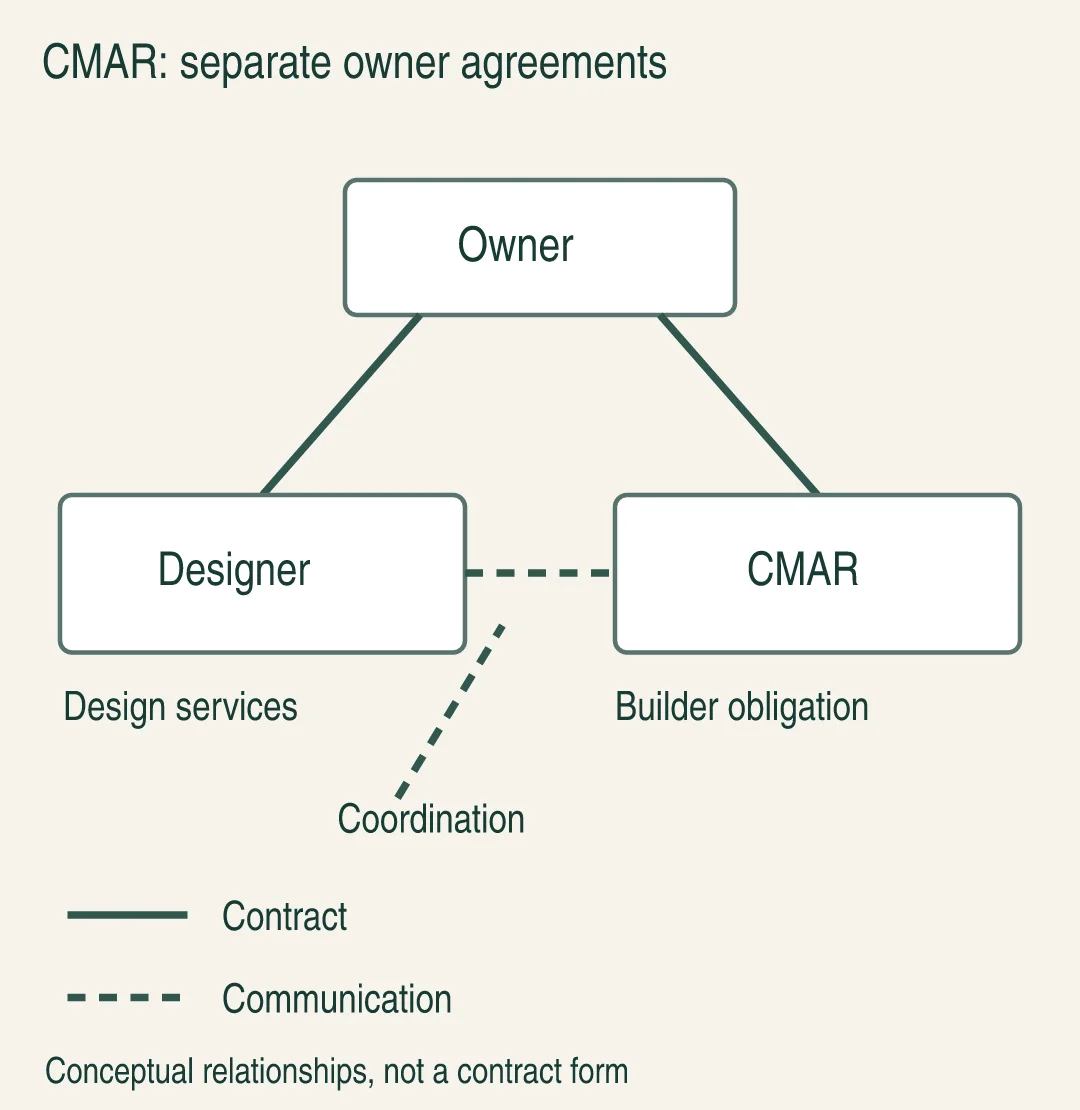
Construction Manager at Risk: CMAR, GMP and Alternatives
An unclear GMP can leave costly scope disputes. CMAR brings a builder into design while the owner keeps a separate design contract.
Read guide
Progressive Design-Build vs Traditional Design-Build
How progressive design-build works: two-phase contracting, open-book pricing, what the owner can do if the Phase 2 price is rejected, and who owns the design work product.
Read guide
Design-Build vs Design-Bid-Build
A practical comparison of contracts, pricing, programme, design control, risk, and published performance research for design-build and design-bid-build.
Read guide